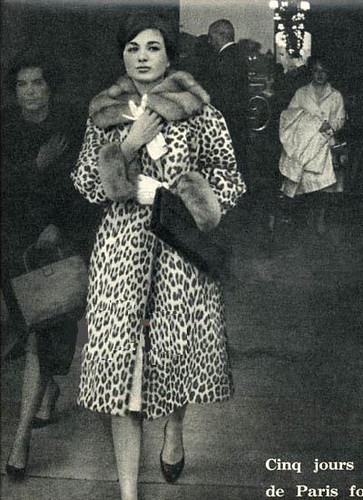
1953


Picturing Ourselves: 1953, 1979 and 2009
A Conversation with Negar Mottahedeh
By GOLBARG BASHI in New York | 12 July 2009
Published
Tehran Bureau[TEHRAN BUREAU] The surge of stunning photos and videos from Iran over the past month have gripped the attention of much of the world, prompting comparisons of protests there with the Tienanmen Square uprising of 1989 in Beijing and other historic moments in the past century. Most of the pre-election images were captured by professional photographers bearing the familiar logos of the Associated Press, Getty, Life, and others. The majority of post-election images, however, have been taken by ordinary people using their cellphones and small digital cameras.
The outpouring of these images via YouTube, Facebook, Twitter and other social networking sites, amplified by an intense two-week long media coverage of Iran, have had an incredible impact on the popular imagination; they have moved even icons such as
U2 and Jon
Bon Jovi to immediately express their solidarity with the green movement in Iran. International human rights organizations such as Amnesty International immediately responded as well, with extensive reports on the brutal police crackdown on peaceful protesters. Many Iranians living outside of Iran have been embraced by friends and colleagues desperate to find ways to help.
Some of the most poignant images have been of girls and women numbering in the hundreds of thousands participating in the pre-election campaign and in post-election protests, giving many a crash course on Iranian women’s studies in a matter of days. To wit, CNN anchorwomen and anchormen corrected each other on the 63% statistic of female university graduates in Iran.
As a friend jokingly said, “Iranian is the new black.”
Even seasoned journalists who have covered the most atrocious and spectacular events on our planet have been moved to the core when they found themselves in the midst of Iranians singing, dancing and marching to the voting booths, and later protesting what they believed was a fraudulent election, and for which they were brutally beaten, arrested, tortured and in some instances even killed. These journalists reported seeing people courageously rescuing one another, even members of the riot police. And again, it is the images of women that they report having carried home with them.
In a
moving column in the New York Times by Roger Cohen, he writes,
“No news aggregator tells of the ravaged city exhaling in the dusk, nor summons the defiant cries that rise into the night. No miracle of technology renders the lip-drying taste of fear. No algorithm captures the hush of dignity, nor evokes the adrenalin rush of courage coalescing, nor traces the fresh raw line of a welt. I confess that, out of Iran, I am bereft. I have been thinking about the responsibility of bearing witness. It can be singular, still. Interconnection is not presence. A chunk of me is back in Tehran, between Enquelab (Revolution) and Azadi (Freedom), where I saw the Iranian people rise in the millions to reclaim their votes and protest the violation of their Constitution… Never again will Ahmadinejad speak of justice without being undone by the Neda Effect — the image of eyes blanking, life abating and blood blotching across the face of Neda Agha-Soltan.”
2009


As someone who grew up in Europe in the 1980s and 1990s, I have very different memories of the public perception of Iran and Iranians: Sally Field in the role of Betty Mahmoody, the battered and imprisoned American woman trapped in Iran by her abusive Iranian husband, men pounding the air with their fists, and Ayatollah Khomeini. The images conjured by Roger Cohen’s columns were those I was desperately looking for when I was a 13 year-old kid confronting Iranophobia in Sweden.
There is more, much more, in the flood of pictures coming from Iran than the tragic end of a young woman’s life who has become the face of this defiance. To gauge the meaning of some of these images and their significance, I turned to Professor Negar Mottahedeh, one of the most perceptive theorists of our visual culture.
I opted for a comparative analysis and shared with her pictures from three successive uprisings: 1953, on the heels of the nationalization of the Iranian oil industry by Prime Minister Mossadeq, which resulted in the CIA-engineered coup that ousted him; massive street protests from 1977 to 1979, which resulted in the Islamic revolution; and finally the June 2009 presidential election. In these three iconic periods, we are witness to three generations of Iranian women participating in the democratic aspirations of their motherland. If indeed pictures do speak more eloquently than words, then what is it exactly that they are telling us?
GOLBARG BASHI: Thanks Negar for agreeing to this conversation. In two previous books,
Representing the Unpresentable: Historical Images of National Reform from the Qajars to the Islamic Republic of Iran (2008) and
Displaced Allegories: Post-Revolutionary Iranian Cinema (2008), you have laid a solid theoretical foundation for our study of the relationship between visual and political regimes — particularly in how the central issue of visibility, or public visibility to be exact, is definitive to the cultural production of modernity. Now, I would like to ask you to look at these pictures, from 1953, 1979, and 2009, and tell me what comes immediately to your mind? In what ways have we changed – regressed or progressed, if these are in fact accurate concepts — in our public presence? What do you see, how do you feel, when you look at these pictures, these three consecutive takes in our modern history?
NEGAR MOTTAHEDEH: Thanks, Golbarg, for the question and for the amazing images.
What strikes me immediately is, of course, the camera’s attraction to what brings wonderment. And it is precisely the presence of women in the public sphere in these photographs that continually amaze and attract the camera gaze in 1953, again in 1979 and again in 2009. I bring this up because it is important to understand that the history of camera technology — its ability to capture the present — corresponds globally with the transformation of the public sphere and the threat of the feminization of power. The camera’s important historical role has been to disseminate modernity and modernity’s impact on the transformation of the public sphere globally from a largely homosocial sphere to a heterosocial arena in which women participate, produce and consume. Even in its attempt to capture the quaint cultures of the other, the camera has been used to contrast quaint representations of fading traditions and customs to images of European modernity. This is as true for the 19th century photographs taken by
Antoin Sevruguin in Iran as for orientalist photographs collected by Malek Alloula, where Algerian women were photographed to suggest that they lead
leisurely lives in the colonies while modern French women worked shoulder to shoulder with men in factories and as carriage drivers in 19th century Paris.
So in all of these photos, what the camera is drawn to, reflects the camera’s own role in the production of culture, namely its part in the fabrication, circulation and consumption of modernity. Hollywood images are the best example of this from the early days, because Hollywood understood the historical role of the camera, and, hence, the efficacy of American movies worldwide. The effects of Hollywood’s empire were economic and ideological, certainly, but they were most importantly sensate and intimate. While the processes of modernization, urbanization and industrialization as well as social movements (such as the impact of Western feminism) shifted both social and gender relations, modern technological developments — trains, automobiles, and cameras — produced new ways of sensing, seeing, and organizing vision, new ways of thinking about time, space, architecture, changes in the urban environment, in advertising, and in fashion. Photographs as part and parcel of these developments in culture have as their role to frame and circulate this modernity and it is clear in these photographs that that’s what they’re doing. What’s modern and therefore attractive to the camera is these photographs, particularly, is the presence of women in the public sphere.
Photographs are thought of as documentary evidence, but in fact what they document is a moment. In other words, they are indexical of a momentary exposures to light.
Speaking to their chronology, what all these photographs mark indexically is the important and integral role of women in social movements in Iran over time. By recording light in critical moments in history they show us that the active presence of women in the civil rights movement of 2009 is not something new. Period.
In the photographs from 1953, women in chadors walk shoulder to shoulder with women wearing dresses mildly influenced by the Western fashions of the time. Some men wear European hats. Women’s hair is
Rita Hayworth-esque in style through and through and little wonder. These fashions arrived and had a mass circulation via the camera, through fashion magazines, newsreels and Hollywood movies.
While men and women of different backgrounds and ideological persuasions participated in the 1979 revolution against the Shah and revolted against his forced Westernization of Iran, the fashions are very much reflexive of 1970s Western fashions. This is especially evident in the second of the two photographs from 1979.
While we witness a certain uniformity in the coiffure and dress of the 1950s and 1970s photos, the uniformity in dress of the photos from 2009 feels very different. Here, the young women especially, show a desire to alter a set uniform — a state-enforced hijab — playing with hair, headbands, colored headscarves and alternative ways of tying them. By contrast in the 1950s and 70s, fashion dictates a conformity in culture even as the women protest Western intervention in national politics and economy.
Again, these photographs are indexes of moments that pass and that are followed by new moments in time; but there is a joy, a hope, a radiance — clapping, chanting, the waving of green flags, balloons and posters, playfully tied wristbands, headbands and tied green rings — in other words, a communal conviviality and creativity, that emanates from the photographs from 2009. This is quite absent from the LIFE photographs. But then again, to be fair, the 1953 photographs are long shots, and people behave differently vis-à-vis the camera close-up. The bottom two photographs from 2009 in particular capture a multigenerational presence of women, again shoulder to shoulder with men. We think of the public sphere in the Islamic Republic as a largely male, homosocial sphere, and yet, the camera insists in nearly every shot to capture the heterosociality of this sphere just as it did in the earlier moments.
GB: I am very intrigued by a number of things you see. Let’s begin with this notion of “wonderment”. If you were to look at these pictures chronologically, do you see the same visual registers of wonderment — is camera as amused by the presence of women in 2009 as it was in 1953? Do you see perhaps a sense of “normalization” about the public presence of women at all, so far as the camera is concerned. Notice also the changes in technology, that today mobile phones and digital cameras seem to have less an intruding presence than the old fashion cameras with their monumental gadgetry. In 1953, the camera stood outside the crowd, today it is joining the demonstration. And then a related question is the transformation that you see from a homosocial to a heterosocial space where modernity is taking place. What do you make of this shot in 1953, where women are encircled by men holding hands by way of what it seems to be a gesture of “protecting them”. Protecting them from what? They are already in public? There seems to be also a secondary kind of heteronormativity at work where veiled and unveiled girls and women are mixed together, which might be accounted for by class, generation, or some vague conception of piety. Your thought?
NM: It strikes me that the camera is just as preoccupied with the presence of women in 2009 as it is in 1953, and as you say it’s the technology itself that has become more manageable, and journalism has, perhaps by necessity, become more participatory. It strikes me though, for the number of cameras and mobile phones that we see in YouTube videos of the events in 2009, there is only one camera present in this set, and it’s in the first image. It’s pointed in the direction of the women’s gaze. While the photographs from 1953 inscribe the distance that separates “us” from “them”, the photographs from 2009, inscribe an immediacy and accessibility that is unmediated and exclusive to “our camera”. In fact both the second and fourth shots flatten the distance between “us” and “them” bringing the events closer. “Unmediated” and “accessible” are really how the post-Election events felt to those of us living elsewhere: their struggle became immediate to those who chose to pay attention. Internationally, all the songs written for Neda and in honor of the struggle for freedom and civil rights testifies to ways that digital technologies have flattened this distance that separates us from them in 1953. The photographs inscribe this historical fact in their framing.
Yes, I noticed the men holding hands to protect the protesters in the photographs from 1953. Do you think it has to do with “gheirat”, with shame and the unseemliness of women’s presence in the public sphere? Perhaps so. Then again there is that big truck full of men in police uniforms sitting on the alert in the second photograph. That is cause enough for concern. That, and other men. The thing is, and I’m glad you bring this up, regardless of the ways in which modernity is marked by the presence of women in the public sphere globally, what constitutes heterosociality and perhaps even heteronormativity is remarkably different nationally and locally. It’s the men that are holding hands in public, not men and women in the 1953 photographs. So while women are present in public, national notions of heteronormativity call for the protection of their honor, be it by the inclusion of pious women or by the presence of men whose function is to be protective shields. Also while the photographs from 1953 emphasize the presence of multiple classes and generations in the struggle side by side in one frame, the photographs from 1979 show these groups as insular. That generational, class-based and gendered insularity is shed in the photos from 2009. The photograph that frames the old lady with a look that has rarely met the camera testifies to that deep sense of national unity.
GB: I want now to turn your attention to the element of militancy. Compare the “proper manners”, the pretty dresses that women are wearing, sporting nice sunglasses, etc in 1953 with the young woman about to throw a stone in 2009. This is not to disregard the extraordinary evidence of festivity in the 2009 pictures, but the undeniable elements of raised fists, coming face-to-face with the security forces, and even throwing stones. What seems to me happening here is a bodily defiance in the public space that is quite new. Here of course we need to remember the presence of young women in such militant guerrilla movements as Cherikha-ye Fada’i Khalaq or Mujahedyn-e Khalq in the 1970s and 1980s. But nevertheless, here we are watching ordinary young women who are throwing stones with manicured hands. Your thoughts?
NM: The Islamic Republic gained its distinction and identity by addressing itself to the senses. In Displaced Allegories I try to show how Khomeini’s revolution was a revolution under the skin. Khomeini’s regime sought to create a new national body and it did so by aiming its regulations, its system of modesty, on the body of women. The manicured nails, the threaded eyebrows, the strands of hair, are all markers of bodily defiance in public space and these acts of physical defiance have been practiced, regulated, and reinvented over and over again since 1981 when the system of modesty and veiling finally became mandatory for everyone. So, a stone in a manicured hand is certainly a violent response, but in terms of bodily defiance to a regime that inscribes itself minute by minute on women’s bodies — to cover up your arms, to lower your gaze, to move through public space unnoticed — the physicality of the response of a generation brought up under laws that address themselves to the senses, to eyes, ears, mouths, voices, to hands and bodies, is far from surprising. Part of the function of restrictions is that they make us acutely aware of the tools we possess, don’t you think?
GB: Let me now turn to what you rightly call “national body”, but in its specifically female dimension, or what we might call the figural representation of Iranian women. If you look at the unveiled women in the 1953 demonstrations you see the ideal-type of a typical urban, educated, suave even, “modern” woman, a figure that later on, after the coup of 1953, during the Pahlavi period was perhaps best represented in the way the former
Queen Farah Diba appeared in public — in a way as if she had just walked out of a Christian Dior catalogue or stepped down from a catwalk in Paris. Now, as you well know and in fact have demonstrated in your Displaced Allegories, that image was radically revised over the last 30 years, since the Islamic revolution, whereby a veiled and as you rightly say regulated female public persona was projected. That veiled figure later repeatedly appeared and consolidated in the mass media, and later on particularly on the cover of a number of books patently critical of the repression of Iranian women under the Islamic republic, as on the cover of books by
Betty Mahmoody, Azar Nafisi,
Mahnaz Afkhami, or even most recently
Janet Afary’s Sexual Politics in Modern Iran, where we invariably see the face and visage of an incarcerated woman, a woman in jail, a woman behind bars. What I believe we are now witnessing in the face and figure of Iranian woman in these demonstrations categorically challenges such projections and their political assumptions, for these pictures in fact show politically defiant, socially assertive, and beautifully self-confident multiplicity of characters from within the social experiences of the last 30 years. In other words, they are neither going back to the former Queen Farah Diba’s public persona nor are they arrested and
incarcerated virgins in a Harem waiting to be liberated. Do you see this new public bodily register, a new and totally unaccounted for comfort zone for the feminine public persona? Don’t you think that the assumptions people have projected of Iranian/Muslim women have in fact been seriously challenged throughout these past couple of weeks?
NM: From what I gather from the conversations I witness amongst folks on Twitter, in the news media and in my local community, yes the assumptions people have had of Iranian/Muslim women have been seriously challenged and there has been a shift perception. This shift in perception has extended to the way that people relate to Iran as a nation. In truth, much of the West has received notions of what a Muslim or Iranian woman should look like and these are reinforced by images that equate female veiling with images of incarceration. To me, language too says a lot about how we are thinking and what we are thinking. This whole confusion that has occurred that equates all gestures of veiling with the burqa suggests in fact that contemporary Western, and especially American, conceptions of veiling derive from a very specific and highly mediated visual encounter — the encounter with Afghanistan post-9/11. The confusions of the terms of veiling has then become generalized and extended to our perception of all Muslim women… But Golbarg, we’ve talked quite a bit about the photographs from 1953 and 2009, and I am curious how you respond seeing the photographs from 1979. What do you see? How do they make you feel? How does your response to them compare to your response to the other photographs?
1979


GB: I see very similar expressions in the 1979 pictures to those I see in 2009. In fact I see more anger, but no stones. Obviously the technology has evolved and in 2009 the camera is far more intimate and in fact amidst the crowd, in the hands of the protestors themselves (the picture of the old woman seems to have been taken with a cell-phone or a small digital-camera). Again I see a multiplicity of classes in 1979, but one thing that may differ from the 2009 images is that in 1979 women seem to be visibly segregated from the men. You see in the first image, three women and a child, they seem to be related and are walking along in a female procession, whereas in 2009, women are mixed with men. What I feel when I look at the 1979 pictures is sadness. I see a genuine struggle against autocracy and I see women as an integral part of that struggle. But fast-forwarding 30 years later, I see that the little girl who must have been my age in the picture with her mother and aunts has not seen the fruits of their struggle. The women in the second picture very much look like my mother, her friends and my female relatives, most of whom were professional, with their (Farah Fawcett) hairdos, the polo-shirts, etc, and in this way I see a huge loss on part of my mother’s generation. In 2009, I see my little sister and cousins and their friends in Iran (all of whom have university degrees, are incredibly creative–they are trained and exceedingly talented DJ’s, bloggers, filmmakers, poets, painters, engineers, doctors–but very few of them hold a steady job) and I see that our mothers’ heartache and pessimism have not prevented them from entering the streets and creating a public space and presence for themselves. Ultimately, I see my grandmother in 1953, my mother in 1979, and my little sister in 2009.
But perhaps most importantly, what today we see in the pictures of 1953 and 1979 is through the sad lenses of our maternal generation not achieving what they fought for, whereas even after this violent crackdown we still look at the 2009 pictures with a sense of hope. The obvious question is how will my own children, my little daughter Chelgis see in the 2009 pictures two decades or so down the line.
But let me now ask one last question regarding mediation — you and I are both on Facebook, as friends, and as you know much of what we are now sharing, including these pictures, is mediated through social networking. Do you think that mediation has an effect on how we are looking at these pictures? There is a cyberspace socialization through these pictures, which would have remained matters of library archival research for scholars. But they are now almost instantly subjects of comparative visual chronology, we can see how we were and how we have become. I am also very much aware of the limitations and drawback of internet-based social networking — so perhaps you could open and examine this connection.
NM: I so enjoy having you as my Facebook friend, and in all honesty I think social media have created modes collaboration and interaction that mark the future of scholarship in the digital age. I think what we see happening on Facebook is the future of scholarship. People have remarked that the whole architecture of journalism fell apart in the course of the Iranian post-election uprising because news arrived on Facebook and Twitter, not on CNN. I think we’re seeing the future of scholarship in that decay as well. Already, my colleagues with any interest in Iran, be it through sports, social movements, news media, film, video, photography, new media, politics, gender, human rights, you name it, they’re all turning to blogs, Facebook , YouTube and Twitter to put together their sources. The immediacy with which these media allow us access to events elsewhere and to each other and the ways that they allow us to build on each other’s contributions — using the share button and the comment area — really suggests the future of scholarship in the digital age, where contemporary Web 2.0 technologies by their very centrality will demand our consultation and collaboration on levels that especially the Humanities has yet to witness. In part, this will mean the opening up of the university and I am all for it.
But I digress. Digital photographs like the ones we are looking at circulate often without captions. We add the captions and date them; we personalize them and attach meanings to the images, meanings that others may not have found. We cannot underestimate the power in that and the impact that the personal value we bring to each photograph has on our circles. Just think how different it would be if we were poring over newspapers together like the
two girls who then become the cover of Nafisi’s Lolita. We’d see a photograph of protestors confronting the police. We’d notice the date on the top of the paper and read the caption the newspaper gives to the photograph. We’d realize that when we were out shopping together at Saks, people elsewhere were demanding basic human rights — Benedict Anderson’s “Imagined Community”. Now the same photograph shows up on our Facebook feed with the caption “The day that Neda died” or “My friend Ali is standing to the right of motorcycle” and just think how that changes the impact of the image on the hundreds of people who we “friended” at some point, people we played with in kindergarten and never saw again until they showed up with an “it’s complicated” status on Facebook. The photograph we post with our caption reflecting its part in our life becomes an integral part of their life. There is an intimacy there… Our captions to photographs on Facebook and Twitter have a different power and immediacy that has to do with personal relationships in real life. We may look at a photograph of crowds in the streets of a foreign city, a photograph we also saw on CNN that same night. But when we read the caption: “I grew up in that neighborhood” on our Facebook feed, we are pulled in immediately. The event becomes ours, it’s woven into the fabric our life.
Thank you so much Negar for this conversation. I have learned so much as I am sure our readers will too.
Thank you so much, Golbarg. I’m such an admirer of your work and your interviews and it’s been lovely discussing these amazing photographs with you. I have also learned a great deal from our conversation.
Negar Mottahedeh is Associate Professor of Literature and Women’s Studies. She received her Ph.D. from the department of Cultural Studies and Comparative Literature at the University of Minnesota in 1998. In 2008, Duke University Press published her book on Post-Revolutionary Iranian Cinema entitled: DISPLACED ALLEGORIES. Her first book, REPRESENTING THE UNPRESENTABLE, on visual history and reform in Iran from the 19th Century to the present, was published in 2008 by Syracuse University Press.
Golbarg Bashi is a regular contributor to Tehran Bureau, where she writes on women’s issues and feminism. She teaches Iranian Studies at Rutgers University. She recently completed her doctoral thesis on a feminist critique of the human rights discourse in Iran.