Friday, December 26, 2014

Creating a soundscape for one Bad City


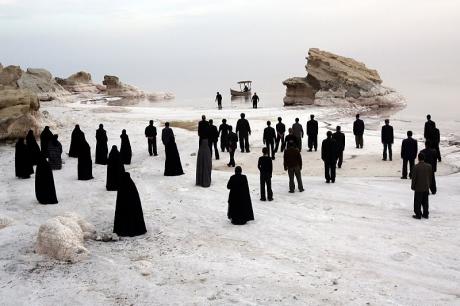
Ana Lily Amirpour's Iranian Vampire Western really captured my imagination. It wasn't just the music, but also the industrial landscape of electrical plants and the fields of oil drills "like galumphing prehistoric beasts, going up and down and up and down" that got me. 


The soundtrack which includes three original fusion beats by Bei Ru is due out in February 2015. That's a long wait for an amazing soundscape for a vampire movie, so I thought I'd hunt down what I knew I could find. 

I put my recipe for the soundscape of the movie's Bad City up amongst the thousands of Christmas recipes on Snapguide:

Check out How to Make the Soundscape to One Bad City by Negar Mottahedeh on Snapguide.

Farah's Dancing Girls which is one of the many fusion tunes that is on the track, is already up on Soundcloud and it really is fantastic.

If you love things Persian, try out the recipes that Davar Ardalan has been posting on Snapguide too! I recommend her #tadig cupcakes:

Check out How to Make #Tadig Cupcakes (Crispy Rice) by Davar Ardalan on Snapguide.

Saturday, April 27, 2013


Mobile Memories.


The academic school year 2012-13 is over! I'm thrilled to have taught two really awesome seminars with projects designed by students on the topic social movements and their uses of social media...research projects on everything from KONY 2012 to The Harlem Shake as a battle cry for Arab youth.

My M.A. student Jing Niu has also completed a fabulous web project on cellphones, our mobile addictions and our memories of their first appearance in our lives.

I really love the project!

The memories project recalls the early versions of the Nokia smart phone, the bag phones, the handys, and the first one-way lover's quarrels we heard in urban landscapes around the world, from Tokyo to New York City.


(I come in with one of my own first memories around 1:06)

Monday, February 27, 2012

Asghar Farhadi's Oscar win by Duke University Press.


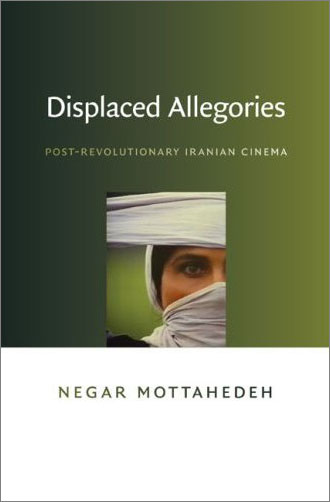
Duke University Press published this little post on Displaced Allegories and on Asghar Farhadi's Oscar win. So honored.


For a review of Displaced Allegories check out Michelle Langford's in Senses of Cinema

Saturday, October 29, 2011

Women and Iranian Cinema

My first Persian language interview for television: A bit bright-eyed and bushy-tailed, I'd say, but here's my hopeful take on Iranian cinema and its representation of women under the rule of the Islamic Republic of Iran... I take a little peek in the crystal ball and talk about what I see as the future of Iranian cinema as well. (Persian only. No subtitles.)

negar mottahedeh

Saturday, October 15, 2011

Transforming consciousness: "When I move you move...just like that"


The post-election crisis in Iran in 2009 ( #iranelection ) inspired many around the world in support of the Green Movement. A symbol of that uprising is now in Liberty Square as Occupy Wall Street ( #OWS ) gathers steam and people move onto the streets in protest all over the world...from Madrid to Sydney.

G. I. Gurdjieff once wrote that: "The evolution of man is the evolution of his consciousness, and "consciousness" cannot evolve unconsciously. The evolution of man is the evolution of his will, and "will" cannot evolve involuntarily. The evolution of man is the evolution of his power of doing, and "doing" cannot be the result of things which "happen.""

Revolution is always first a creative transformation of consciousness and this transformation is always incremental. Each instance of transformation inspires the next with creativity and will.

The video presentation below reflects on the uprising in Iran in 2009 and the waves of uprising that have followed on its heels ever since. Once again I draw on the commanding words of Ludacris which presaged the movement toward social transformation when he said: "When I move you move...just like that!"

Here's to the 99% that have risen tonight to Occupy Together

TechPowerTalk from Melanie Plageman on Vimeo.


(My gratitude to Melanie Plageman for organizing an excellent conference on technology and social movements from which this video derives.)

Sunday, July 31, 2011

Video traces of our tribute to the silenced filmmaker Jafar Panahi at Asia Society

My colleague Hamid Dabashi and I had the idea early this year to create, with the exquisite La Frances Hui of Asia Society in New York, a tribute at Asia Society to the silenced Iranian Filmmaker Jafar Panahi.

I am only just now getting to the task of collecting the videos that were produced during the course of the month long tribute, thanks to the very capable staff of Asia Society.

These are mostly introductions to the films, but there is also a final panel discussion which includes remarks by Hamid Dabashi (Columbia University-Moderator), Hadi Ghaemi (International Campaign for Human Rights in Iran), Negar Mottahedeh (Duke University), Richard Peña (Film Society of Lincoln Center/Columbia University).


Hamid Dabashi on Crimson Gold.


Negar Mottahedeh on Offside


Negar Mottahedeh on The Circle


Reflections on Jafar Panahi's life, work and sentence by Hamid Dabashi (Columbia University-Moderator), Hadi Ghaemi (International Campaign for Human Rights in Iran), Negar Mottahedeh (Duke University), Richard Peña (Film Society of Lincoln Center/Columbia University).

Sunday, February 27, 2011

The Wind in Film: Kiarostami's Five (for the Iranian film Blogathon)


I am reposting this short piece on Kiarostami and movement for the Iranian Blogathon Feb 21-27, 2011:


I never tire of watching Abbas Kiarostami's Five. The combination of natural, elemental forces, and the human and technologically mediated incident simply bring me to life and charge me with wonderment and delight.


I have for some time now enjoyed my exchanges around art, books, photography, music, philosophy, literature, technology and the wonders of our age with my friend Darius Himes. And we have, off and on, both remarked on our love for Kiarostami's work. Then suddenly yesterday, amidst the hustle of the Duke-at-work-Saturday, I discovered that Darius had used one of our favorite Social Media tools Qik.com to make a short film about the book and the wind. I love it. It reminds me of passages in Kiarostami's Five. Elegant and elemental. Wind and paper ... then, movement, the essence and object of cinematic fascination from the start. (Remember the rustling of the leaves in Lumiere's The Baby's Meal [Repas de bebe, no. 88, 1895]?**)


** In Lumière’s Repas de bébé, of 1895, it was not the relatively repetitive activity of feeding the baby that captured the attention of the audience, but the small matter of leaves rustling in the background, moving discontinuously in an otherwise imperceptible breeze. A small matter perhaps, but for an audience familiar with the closed circuit of mechanical illusions of motion (via such devices as thaumatropes, zooetropes, phenakistascopes) the discontinuous demarcated the territory of the real, and confirmed the verisimilitude ceded to the camera. --Thomas Zummer "Arrestments: Corporeality and Mediation"

Friday, February 18, 2011

Film Series: A Tribute to Iranian Filmmaker Jafar Panahi


Film Series: A Tribute to Iranian Filmmaker Jafar Panahi

I'm very excited to have been involved in the making of this film series at Asia Society. It starts Friday 25, 2011. Also, there will be a panel discussion focused on Panahi's work on Wednesday, March 2, 2011, 6:45 pm at Asia Society.

The panel highlights the cinematic achievement of filmmaker Jafar Panahi and explores the current state of creative expression in Iran.

Speakers include: Hamid Dabashi (Columbia University-Moderator), Hadi Ghaemi (International Campaign for Human Rights in Iran), Negar Mottahedeh (Duke University), Richard Peña (Film Society of Lincoln Center/Columbia University).


Sunday, February 6, 2011

A Revolutionary Consciousness: When I move you move. Just like that.

This post is about the ingenuity and creativity of revolutionary consciousness and less about technological savvy and mass uprisings. But that is where I will start.


I started thinking, once again about my research on the Iranian uprising after the presidential election of 2009, and found Mark Colvin's recollections of that period at the 2009 Media 140 conference above useful. Something I had missed: #iranelection as a hashtag (or search topic) on Twitter emerged at the same time as the hashtag #CNNfail. In esssence, #CNNfail testified to the problem the world encountered with traditional media (such as CNN) as masses of people were struggling for their rights under a repressive regime.

In the past few weeks, the world has been a witness to revoutionary uprisings in Tunisia, Yemen, Jordan, Libya, Gabon and Egypt. Masses of people have bravely risen to demand basic human rights, freedom and democracy. Alert to the possibilities opened up by the Wikileaks crisis, our attention has been hooked on the online stream of information: on Al-Jazeera's online broadcast, as well as the tweets and blogs that reach our shores from the ground as new events unfold.

Now, as taken as I am with the uses of new technologies in bringing about change in the context of mass uprisings, I am equally, if not more, fascinated these days, by the poetics, that is, the ingenuity and the creativity of the revolutionary consciousness, a consciousness that, in its receptivity, creates the possibility for transformation all around it.

The German literary critic Walter Benjamin spoke of this consciousness in terms of childhood, (because it shows up with greater clarity in childhood than in adulthood) where the child's mimetic faculty sees correspondences between things --and in the revolutionary context, between past and present events-- "by means of spontaneous fantasy". In this way, this consciousness opens up new possibilities while also constructing the contexts for the child's own entry into the world. This gallery of photos of the helmets of the Egypt uprising shows both the symptoms and the signs of this revolutionary consciousness to my mind.


As Susan Buck-Morss suggests: “The revolutionary ‘signal’ which ”proceeds ‘out of the world in which the child lives and gives commands” is the capacity for mimetic improvisation “…of perception and active transformation”. This mimetic consciousness is a revolutionary consciousness, by means of which “new forces and new impulses appear..."

Of the child's drawers, Benjamin writes: They must become arsenal and zoo, crime museum and crypt. “To tidy up” would be to demolish an edifice full of prickley chestnuts that are spiky clubs, tinfoil that is hoarded silver, bricks that are coffins, cacti that are totem-poles and copper pennies that are shields.” [See Susan Buck-Morss's brilliant piece on Walter Benjamin: Revolutionary Writer for these quotes)

This ability to see correspondences --say, between past and present-- shifts consciousness into another temporal dimension of 'now-time’ -- a potent attentiveness in the present--"in which both revelation and revolution" occur.

This transformation in consciousness is the revolution that is (there on the streets and squares, but also here in our minds and in fact, ) everywhere. To quote Ludacris on this matter, because frankly, he put it most succinctly : When I move you move. Just like that.


Friday, January 21, 2011

Building Iran: a review


My mother, Faezeh Seddigh, is a very talented architect and artist. I admire her. I always have. And I always wanted to be just like her. As a child I used to hang out at her studio,where she and other architecture PhDs worked under Houshang Seyhoun's supervision. I wanted to be them. They were so much fun to be around when I was a toddler. Many of them are still my friends.

Forty years have passed since those days in Tehran and I still remember my mother vividly in the light of that space. I also remember the sparkling amber color, and the scent, of the brewed Persian tea that was served as these young architects created their designs for Iran.

Then, sometime last April, I met Talinn Grigor. She's a Professor of Fine Arts at Brandeis and a critic of Iranian architecture. When we met at an academic conference where we both gave papers in Austin, she was writing this book which is in part on the legacy left by Houshang Seyhoun in his work as an architect under the Pahlavis. I'm thrilled to have reviewed it for Iranian Studies. It is absolutely brilliant and reads like a detective story. I suggest you run out and buy it.

Talinn Grigor's Building Iran: Modernism, Architecture and National Heritage under the Pahlavi Monarchs
Grigor Review

Monday, December 27, 2010

Negar in NYC


Since I lived in New York in 2001, I've had one dream and one goal only (besides writing my books, working on being a great educator and practicing my yoga), that dream was to return to New York (triumphant) and have a place I could call my own. Last year, around this time, that dream came true. I came back to New York with tenure at Duke University, and thanks to my great broker, Michael Villani, I bought my own little place close to the Hudson, on hallowed ground. (I have to tell you more about the "hallowed" part some day).

This year, I am going for another dream, thanks to the love and encouragement of my powerful coach Hildie Dunn at the Handel Group, and that is to write articles in magazines, like Elle and Vogue and who knows, maybe someday, The New Yorker.

I am designing this dream playful and joyfully and with a huge dose of focus and intention. So to start things off in a fun way, I've created a Tumblr account where I will keep track of ideas for things I might write about.

My new play space is called Negar in NYC.

And..... wait for it!

Here's the tagline:

I love New York and I still live my life in Gotham with a sense of wonder
~ Like Amelie ~
Negar in NYC is New York City's Amelie in Paris.


I AM sooooo excited! Join me in designing your own dreams! Dream along with me! Come explore the City with me! Give me feedback on my writing! And let's live like there's no tomorrow!


HAPPY NEW YEAR EVERYONE!

Friday, October 29, 2010

Skyping everything

It has been a busy week of Skype and activism.

This week, was the six month anniversary of Brainquake. To continue our celebration of women's lives which commenced with Brainquake on April 26, 2010, Golbarg Bashi and I started the Brainquake Channel on Youtube. We will be posting interviews with spectacular women who inspire us and everyone around them in the months ahead. First up, is Liss Nup, one of my favorite online activists and the powerhouse behind One Million Voices for Iran Campaign


I also Skyped in to the CIANTEC conference in Brazil and gave a paper on the Iranian post-election crisis entitled: "Green is the New Green" Here's the view in Brazil of me giving the paper:


and here's my view Sorta! I love Skyping everything now!

Oh, and Khakestar, my lovely little Booj, was very well-behaved through it all!


Sunday, September 19, 2010

The Relationship Revolution

As the school year begins, I would like to share this wonderful piece by Melinda Blau on the internet and the Relationship Revolution. Thanks to Cathy Davidson for bringining the piece to my attention.


http://www.psychotherapynetworker.org/magazine/currentissue/1094-the-relationship-revolution?start=1

Tuesday, May 4, 2010

What defines a Woman? How do we continue the debate generated around feminism by Brainquake and Boobquake?

I don't think that a sustained discussion of what defines a woman and what the character of feminism is today would have happened had both Boobquake and Brainquake not happened. The question is, how do we sustain this discussion once it's been generated in social media in the cracks and crevices created by two duelling quakes?


As Lina Srivasta writes, "social media in its present forms is limited in its ability to create a sustained, long-term effective movement." Social media is great for bringing together like minds across the globe, great for testing ideas, great for ephemeral debates, but if we want to sustain a focused educational discussion or an educational campaign on a global scale, what do we do? Where do we go next? That's where my thinking stalls today.

Perhaps as my colleagues Ed Webb and Lisa M Lane write, we'll be just fine without permanence, "let the data flow past, focus on the now, the experience, rather than seeking to hold on to anything."

Or maybe as my brilliant friend Liss Nup put it in her postmortem on Boobquake and Brainquake: "We came for the boobs, stayed for the smarts." And we'll keep the smarts coming!

Meanwhile the Brainquake team is still uploading photos and biographies of amazingly talented, creative, intelligent and dazzlingly capable women on the Brainquake Fan Page and on the Brainquake Tumblr site. Check it out and keep sending up your stories and uploading important news; keep sharing your comments and ideas and keep putting up your photos of women who made a difference in whatever way, large or small.

Future of learning to be determined by students, panel says


Though they discussed a wide array of topics, the Future of Learning Panel centered its conversation on one theme articulated by session Chair Cathy Davidson: “How do we make the most of traditional institutions and unite worlds that are not always part of our institutions as traditionally conceived?”

The panel consisted of five professors from Duke University:

* Cathy Davidson, co-founder of HASTAC – the Humanities, Arts, Science and Technology Advanced Collaboratory
* Laurent Dubois, a historian of French colonialism and the Caribbean
* Negar Mottahedeh, a highly respected academic author who staged the first-ever Twitter Film Festival
* Mark Anthony Neal, the author of four books, a frequent commentator for National Public Radio and contributor to several on-line media outlets
* Tony O’Driscoll, author of “Learning in 3D: Adding a New Dimension to Enterprise Learning and Collaboration,” with Karl M. Kapp.


In addition to discussing the future, the panelists talked about some of their individual experiments with technology in the classroom. Mottahedeh spoke about her experiment with the Twitter Film Festival in her introduction to film studies class. Students posted video clips to a class blog and Tweeted about them with links to analysis. The effort attracted more than 300 followers from all walks of life.

Dubois is currently working on a project called the Haiti Lab that will link Haitian students with faculty through the Internet to continue education while the country is still in a state of disrepair.

WWW 2010 - "The Future of Learning is the Web." From left to right: Laurent Dubois, Negar Mottahedeh, Mark Anthony Neal. Photo by Elon University Relations photographer Kim Walker.

“There’s a need for the university to be a space of rapid reaction,” he said. “Haiti needs an immediate plan and action.”

Davidson drew national press attention by writing a blog post titled “How to Crowdsource Grading,” which encouraged educators to use peer learning to evaluate students’ work and make it public. Now that the end of the semester is approaching, Davidson said her class did surprisingly well, producing a high caliber of work and motivated by the fact that it will be published.

O’Driscoll is teaching a class in which students put all deliverables into the creative commons and evaluate one another’s work. He said students held one another accountable for the material they produced, even asking to use his criteria to assign grades.

Neal has used his classes to take students’ knowledge into the Durham community through live webcasts, one of which drew 10,000 viewers. He also posts prompts to his exam questions publicly to employ generative learning.

Much of the panel’s spirited discussion was generated from audience questions, addressing issues like the use of Twitter during class, the ways technology affects student attention, and computer games as motivational learning.

“To allow students to be on their blackberries and computers is giving up a lot of power associated with being in ivory tower,” Anthony said.

WWW 2010 - "The Future of Learning is the Web." Cathy Davidson. Photo by Elon University Relations photographer Kim Walker. Creative Commons rights

Though some argue that electrons distract students rather than enhance their experiences in the classroom, Davidson pointed out that just because students stare at their instructors does not mean that they are paying attention.

Some of the panelists felt that the use of social media during class could actually enhance the student experience. O’Driscoll said he uses a class hash tag to monitor student interest and questions, as a replacement for the “note card technique” of collecting questions. There are even filter applications available to help determine the most relevant questions.

“Teaching does not exist in a pristine way,” Davidson said, noting that learning will continue to change as technology advances.

O’Driscoll said he hopes that more educators will follow the example of a game-based school called Quest to Learn that uses the “magic circle” method to enthrall students. He said teachers need to find “the magic between solid instructional design and the magic circle, and ground it deeply in good, solid pedagogy.”

Mottahedeh ended the discussion by noting that it isn’t the technology that will determine the future but the students.

“Students are the difference in the world, and we’ll figure out together how they will make that difference,” she said.

-by Rachel Cieri

Thanks Rachel! Here's the original story


Yup...once again I tweeted through my entire panel!

Wednesday, April 28, 2010

#Brainquake and Boobquake: Reflections on two feminist social media campaigns


Brainquake-- a response.

I've had a chance to think through how the Boobquake and Brainquake campaigns went down in social media and in traditional media and wanted to take this opportunity share some of my thoughts with all of you.

I think it is clear that the Brainquake campaign on Facebook and #Brainquake on Twitter was a response to the Boobquake campaign which was started by Jen McCreight. In other words, in my thinking anyway, there have been plenty of pronouncements of "the Sedighi variety" on women and women's bodies to which we could have responded with any number of campaigns, but we haven't and we didn't.

Brainquake was a direct response to Boobquake and an effort to celebrate the lives and achievements of women in Iran and elsewhere. In my thinking, again, and I cannot speak on behalf of Golbarg, there is a lethal cultural context which harbors a blatant orientalism (a notion of backwardness vs. progress) in which Boobquake was born. Combine this with misunderstandings of the Iranian women's movement and Iranian feminism & its historical, social, political and cultural contexts and mix in boobs and what you have is --wow-- explosive.

Now take this batter to social media venues such as Twitter, Youtube and Facebook where anyone can say anything, anything goes, and what you have is a total dissolution of a campaign with potential.

This was the subject of a very lively discussion on Twitter between myself and a group of social movement/social media strategists last night. Lina Srivastava summarizes our discussion really well in her blog on Strategies for Social Change. We all benefited from seeing how both Boobquake and Brainquake played out and devolved to the lowest common denominator on April 26, 2010: Boobs and frivolity on one end, and violent explosive anger on the other. Kendall Thiessen really said it best: "Once you introduce boobs, you KNOW the kind of response you are going to get. Clearly the message was lost."

I want to point out the little known fact that Jen McCreight and I have been in close contact throughout both campaigns and that I have been in support of the #boobquake hashtag on Twitter and in support of Jen herself personally. I told her, though, flat out, that I was dong Brainquake. This, because it was very clear, early on, that what she had conceived and what happened were going to turn out to be two different things.

Hers was a scientific experiment and a 3rd wave feminist response to a cleric's suppositions. She's an atheist, a soon-to-be-PhD-student, and a skeptic and she wanted to test out Sedighi's claims regarding the correlation of quakes and women's immodesty. Her curiosity is precious and I cannot look askance at that as a university professor myself. In addition, anyone who was on social media in the last week, knows that while the #boobquake hashtag brought attention to the situation in Iran and the post election crisis (and I saw this as an excellent development from where I stood), it also brought with it the hordes of heterosexual men egging women on for a cleavage show on Monday. Add to that, the commodification of breasts, cleavage & women's skin in the global context of the media, and the campaign, sure enough, became a piece ripe for porn magazines. Playboy of course picked it up.

All this put a great deal of stress on the direction of the Boobquake movement and lay the burden on those who understood what Jen was up to... well to explain it, defend it, and sometimes fight against the very things it was promoting, for example the exposure of women's bodies, in the context of commodification and commercialization. And a healthy scientifically minded skepticism aimed and religious fervor and superstition, in the context of a racist and orientalist culture that either willfully misunderstands and misrepresents or unknowlingly conceives of everything Middle Eastern as backward.

Also, while Jen was taking orders for Boobquake t-shirts that would make money for earthquake rescue charities, capitalism and commodity culture dictated that a tongue-in-cheek social movement become a money making scheme for a sex - hyped-downturned economy, to the extent that just today, the University Store at Purdue where Jen studies, started selling "Boobquake t-shirts" without Jen's permission.

All this to say that while I understood Jen's mission and stood by her as a woman, a student, a skeptic and a scientist, I also could see that the combination of Orientalism (notions of backwardness vs progress) + misunderstandings of the Iranian women's movement / feminism & its cultural social and political contexts + boobs was doomed to a total failure.

Why not have a Brainquake then and quake some brains to freedom? And why not celebrate the lives and achievements of women? Why not celebrate individual lives instead of meat? These were my thoughts as I watched a science experiment devolve into frivolity, commercialism, and the commodification of women's bodies in social media and traditional media

My efforts and Golbarg's, as I see it, was to enable the stories of women to be heard. And if you look at the Brianquake Twitter feed and the Brainquake Tumblr site or even the photos put up on the Facebook Brainquake page you'll see this celebration in action in the midst of a battle ground that is determined to turn Golbarg, Jen and myself into rabid cats. We didn't succumb to this. Neither did we misunderstand or misrepresent the other's intentions knowingly. A critique of the direction of the campaigns themselves were taking, one as a response to the other, one major and one minor, was inevitable.

I hope this helps and inspires others to do better and achieve greater things on behalf of all of us. We all stand on the shoulders of giants and I am humbled by all the things I have seen and heard from each of the participants in the Brainquake campaign. I leave you with this quote from Dawn.com by Rafia Zakaria

"In socio-cultural paradigms where women’s bodies symbolise familial and national honour, as in Iran or Pakistan, their covering is seen as corresponding directly to the piety and righteousness of society. Consequently, there is a brutal and obstinate disregard for women’s autonomy and their status as human beings equal to men.

Conversely, in western societies, a similarly reductionist calculus construes the exhibition of the female body as a sign of liberation, with an equally stubborn blindness to how such sexualisation debases women. Both versions are replete with untruths perpetuated by men. And just as a woman in a burka is complicit in the lie that the female form is the source of discord, so is the woman who displays her body complicit in demeaning it to a mere sexual object"

Tuesday, April 27, 2010

#Brainquake: A Celebration of Women's lives April 26, 2010


Wow! Yesterday's Brainquake was a fantastic celebration of the lives and accomplishments of women everywhere. As I was introducing these amazing women to peeps on Twitter and posting their bios, I was filled with feelings of awe and total humility at the magnitude of our collective capacity to transform the world.

I'll post more about the press and discussions around Boobquake and Brainquake later on this week. But, meanwhile, check out Brainquake women's awe-inspiring pictures and biographes on Facebook, Twitter and Tumblr and become a fan of the Brainquake page on Facebook!

I love my collaborator Golbarg Bashi for her warm friendship, her ingenuity, vision, courage and smarts. She is a force of nature and the brains behind Brainquake.

Here: Listen to her podcast with MideastYouth as she discusses Brainquake

Friday, April 23, 2010

#Brainquake: Why I won't be joining #Boobquake


When Hojatoleslam Kazem Sedighi made his stupid comment that immodestly dressed women cause earthquakes, he of course joined fellow fundamentalist religious preachers such as Pat Robertson who have made similar claims about marginalized groups, women, the poor, third world nations, etc being responsible for natural disasters. In the case of Pat Robertson he went so far as accusing Haitians of having made a “pact with the Devil.”

The Sedighi comment was no news to Iranian women, nor was it a funny joke. For over 3 decades the Islamic Republic has used and abused women's bodies and women's socio-economic and political rights in shaping and defining its repressive policies. Iranian women have fought back in various ways, one of which has been to dress “subvervily” but as it is evident in the Green Movement (the name the Iranian opposition is known by) , it is not their “beauty” or bodies that they have utilized in fighting against a brutal theocracy but their brains, their creativity, art, writings etc.

Golbarg Bashi and I are saddened that Jen McCreight (a blogger at Blag Hag), and the so-called feminist response has been “showing off some cleavage for ‘Boobquake’ this Monday”. This campaign has aroused the evidently insatiable enthusiasm of the web community, male supporters in particular who can’t wait to see “regular” girls and women, many their direct friends to “showing off their tits”.

Her own words suggest a lighthearted mockery, a statement on women's rights and a desire to scientifically test Sadeqi's claims.


Everyday women and young girls are forced to “show off cleavage” and more in order simply to be heard, to be seen, or to advance professionally. The web is already filled with images of naked women; the porn industry thrives online and many young girls are already vulnerable to predatory abuse. Violence against women and girls has consequences for the sexualisation of women and girls. The extent of their sexualization is evident in the hundereds of replies that pour into the “Boobquake” Facebook page where women write, apologetically: "I don’t have boobs, not fair" or "Hey, I only have a C cup… ” and “what about those of us who no longer have a cleavage? they sag too low.”

World-wide, the sexualisation of women and younger girls, as young as pre-schoolers is a genuine problem and as mothers, feminists, and young women ourselves we believe that it is time to move away from this “bare it all” mentality.

Let’s create a “Brainquake” and show off our resumes, CVs, honors, prizes, accomplishments (photo evidence), because the Hojatoleslam and the Islamic Republic of Iran are afraid of women’s abilities to push for change, to thrive despite gender apartheid (Did you know that over 64% of students studying at universities in Iran are women?) Let’s honor their accomplishments by showing off our abilities, our creativity, our ingenuity, and our smarts on our blogs, on Wikipedia, on Twitter, on Youtube, on Flickr and all over Facebook. And remember to use hashtag #brainquake on Twitter.


Join the Brainquake Facebook event page here: http://www.facebook.com/event.php?eid=100832899962032

Here's some inspiration:
Why I won't be joining the "Boobquake"


UPDATE: So here's the first Youtube video for #Boobquake. I guess we could say this is the first response to #boobquake & #brainquake's call to action in one swell package, well kinda?!? Rock the ayatollah!

Some research on Social Media and the Iranian Post Election Crisis, 2009

I've had the privilege of connecting with new friends to discuss my research on the uses of social media in the Iranian post election crisis, 2009.

This piece Green is the New Green on the activities of the Green Movement in calling for civil liberties and human rights in Iran will be published in the journal New Politics shortly.

Green is the New Green: Social Media and the Post Election Crisis in Iran, 2009

And then there is this podcast which apparently blocked Iranian access to MideastYouth.org (I'm joking of course!)


Finally, Rachel Cieri of the FutureWeb blog did an interview on our Future Web 2010 panel in Raleigh where I will join my friends and colleagues Cathy Davidson, Laurent Dubois, Mark Anthony Neal, and Tony O'Driscoll and speak on the uses of Social Media in the Iranian post-election crisis of 2009.

I hope you'll find this material useful in your own research. Let me hear from you!

Monday, April 19, 2010

Karbala Drag Kings and Queens: A history of female ta'ziyehs.

This article is a draft of research I have done on female performance traditions in Iran. It is soon to appear in the volume entitled Eternal Performance: Ta'ziyeh and Other Shiite Rituals edited by Peter Chelkowski.

Karbala Drag Kings and Queens